

As part of Essex Partnership University NHS Foundation Trust’s wider programme of AI and digital transformation, this case study examines how Thalamos’ eMHA platform is digitising Mental Health Act processes to support safer, more coordinated and better-informed care. Featured within Curia’s From Insight to Action report, the case study reflects the work undertaken through EPUT’s Digital Conference and patient-led sprint sessions, which explored how digital tools, integrated data and redesigned workflows could reduce fragmentation, strengthen patient safety and release more time for care.
Thalamos provides a practical example of how structured digital workflows can replace paper-based processes, improve the secure sharing of statutory information and give professionals a clearer, real-time view of a patient’s journey. By creating a reliable audit trail and highlighting emerging patterns, the platform can support earlier intervention, better multi-agency working and the use of the least restrictive options.
This article was sponsored by UK Healthcare and Life Sciences Innovation (UKHLSI) member Thalamos.
To find out more about Thalamos, visit: www.thalamos.co.uk
Across mental health services, there is no shortage of commitment or data. Yet the ability to consistently translate that into safe, coordinated and timely care remains constrained by how the system itself is designed.
Nowhere is this more evident than in the delivery of Mental Health Act (MHA) processes.
People subject to the Mental Health Act often move between emergency departments, mental health services, police custody, ambulance services, local authorities and independent providers within the same episode of care. Each part of the pathway may hold different information relevant to risk, legal status, safeguarding or previous intervention.
Decisions are made under pressure, with immediate and profound consequences. Yet the infrastructure supporting those decisions has not kept pace. Information remains fragmented, processes are often manual and visibility of a patient’s journey is limited at the point it matters most.
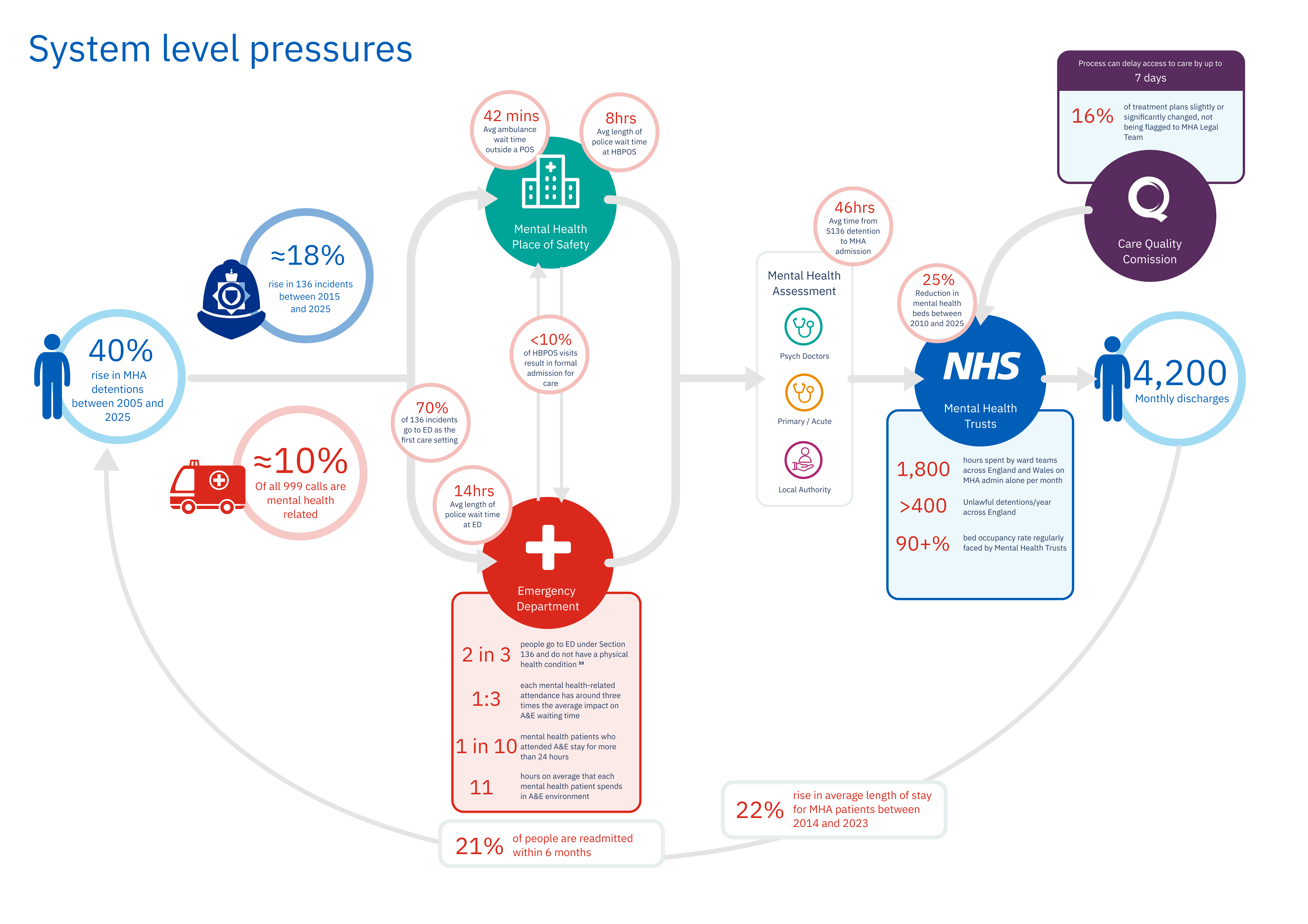
Across the system, a consistent theme has emerged. Fragmentation, administrative burden and a lack of joined-up data are not peripheral issues. They are among the primary barriers to delivering better care. They limit time with patients, constrain clinical decision-making and reduce the system’s ability to identify and respond to risk early. In this context, delays are not simply inefficient. They can change outcomes.
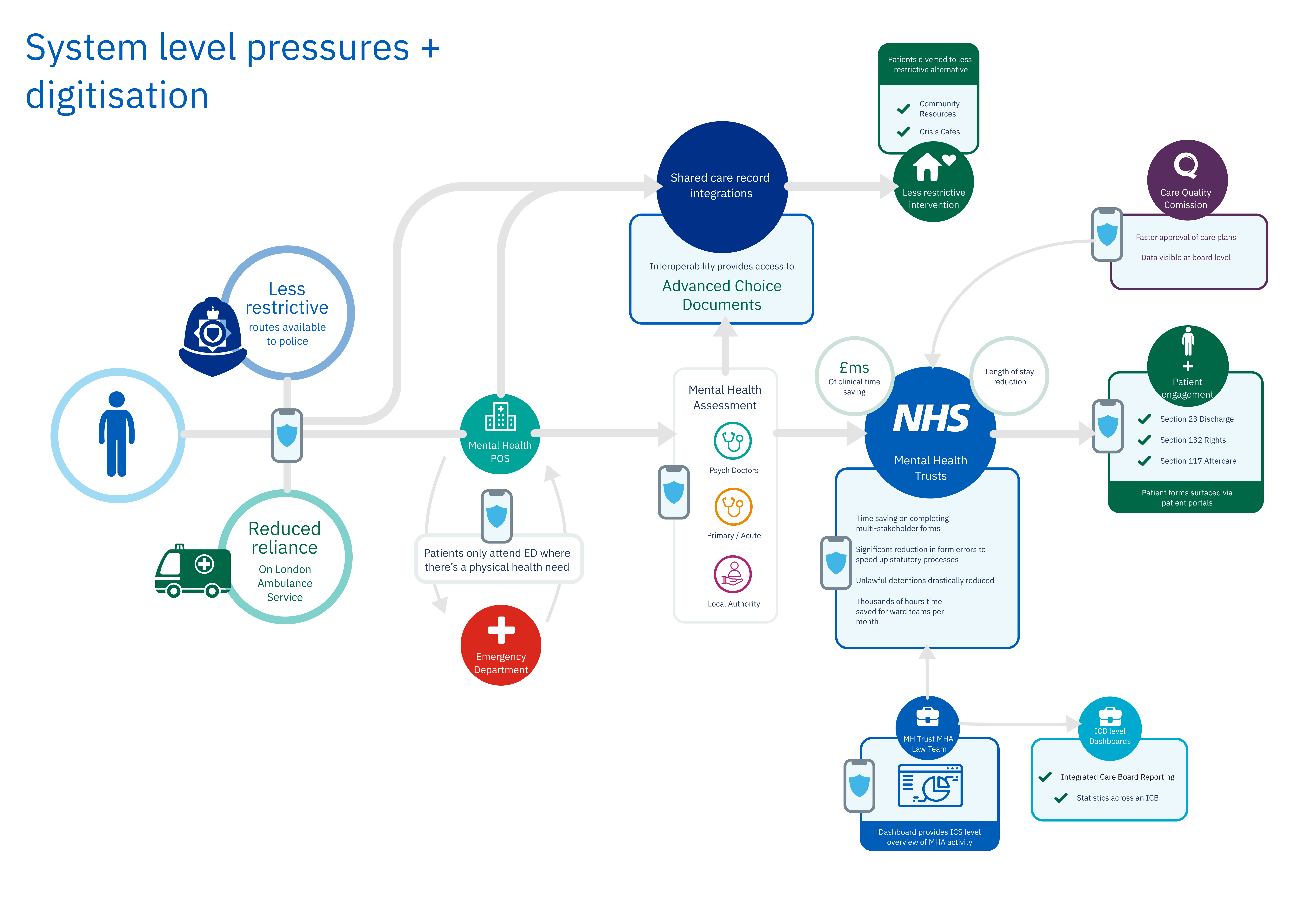
System-Level Pressures
At the same time, there is a clear direction of travel. Services are moving from reactive to proactive care, from isolated systems to integrated data environments, and from administrative burden to time for care. Delivering that shift requires more than incremental improvement. It requires redesigning the processes that shape how care is delivered.
Digitisation of MHA workflows is one of the most immediate opportunities to do exactly that.
Structured digital workflows provide a practical example of how services can move from fragmented processes towards more integrated, data-driven models of care. By standardising how statutory information is captured, accessed and shared, organisations are able to create greater continuity across pathways that have traditionally relied on disconnected systems, manual communication and retrospective oversight.
A Structured, Real-Time Approach to MHA Workflows
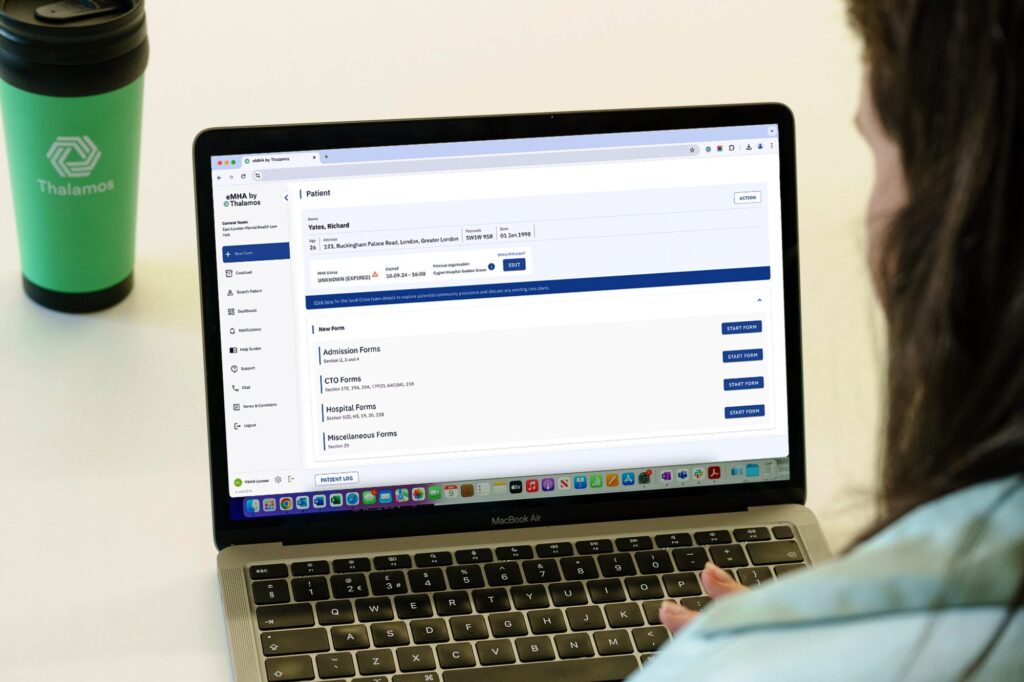
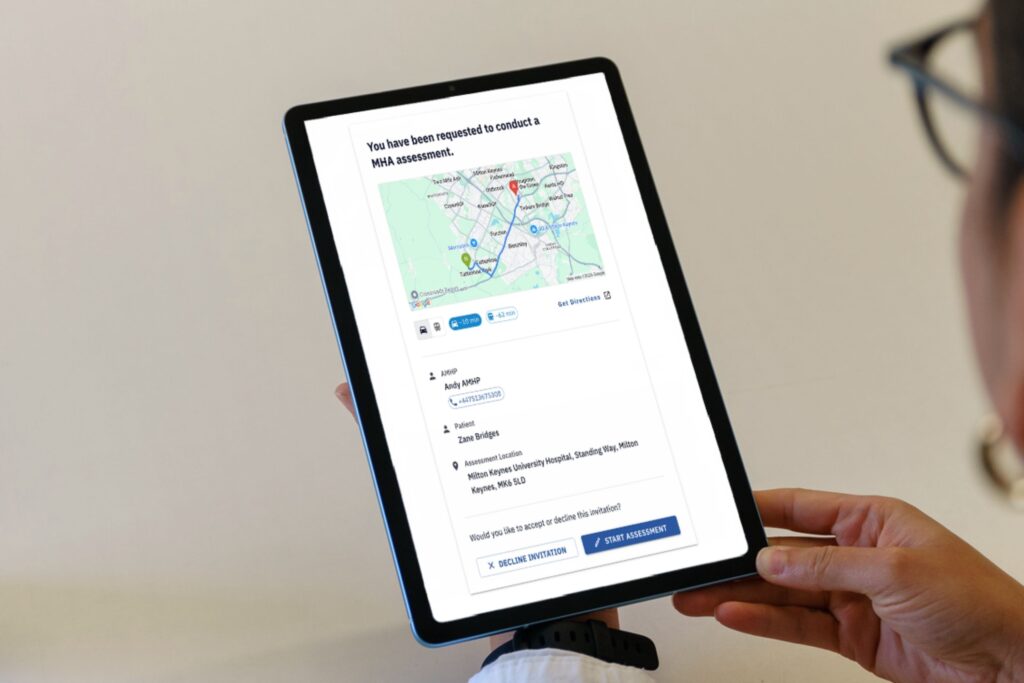
eMHA by Thalamos has been developed to address these challenges by introducing a structured, end-to-end approach to managing MHA processes.
Every statutory step is captured, validated and shared within a single, purpose-built environment. Digital forms enforce completeness through mandatory fields, timestamps and role-based sign-off, creating a clear audit trail and reducing ambiguity.
More importantly, information is no longer dispersed. Digitising MHA workflows creates a structured source of truth that can be shared more effectively across organisational boundaries. Through eMHA by Thalamos, organisations are able to provide authorised access to key statutory information, even where partner agencies are not full users of the platform. This provides immediate context in situations where time and clarity are critical.
In practice, this reduces reliance on email, telephone calls and manual document transfer, while maintaining appropriate governance and auditability. The result is a more coordinated response, where professionals are better informed at the point decisions are made, without requiring full system alignment across every organisation involved.
Given the legal and clinical sensitivity of Mental Health Act processes, governance and information assurance are critical. eMHA by Thalamos incorporates role-based access controls, full audit trails, structured permissions and secure sharing capabilities designed to support information governance requirements while maintaining staff confidence in how sensitive information is accessed and managed.
Organisations deploying structured digital MHA workflows have reported:
- Elimination of common errors and legal issues associated with paper-based processes.
- Significant reductions in time spent locating documents, re-entering information, validating forms and manually coordinating statutory workflows across teams.
- Faster progression through key stages of the MHA pathway and more coordinated, multi-agency care.
- Improved confidence that decisions are being made with the full available context and support the least restrictive options.
This directly supports a central system ambition: reducing administrative burden and releasing more time for patient care, while building the data foundations required for future innovation, including AI-enabled insight.
From Retrospective Oversight to Proactive Safety
One of the most significant shifts enabled by digitisation is the move from retrospective review to real-time insight.
When MHA activity is captured in a structured format, organisations can identify patterns that would otherwise remain hidden. Repeated short-term detentions, an increasing frequency of crises or delays in key processes can be recognised as they emerge. This does not replace clinical judgement. It strengthens it.
By surfacing clearer, more timely statutory information at the point of assessment or review, eMHA supports professionals to make better-informed decisions within fast-moving and high-pressure environments.
At an organisational level, structured data provides greater visibility of variation, operational pressures and areas where additional intervention or oversight may be required. This supports a more proactive approach to governance, quality improvement and patient safety across the wider mental health system.
System-Level Pressures and Digitisation
In this sense, eMHA by Thalamos illustrates a wider principle underpinning digital transformation across mental health services. Meaningful transformation is not achieved by layering technology onto existing complexity. It comes from redesigning critical workflows and integrating with existing systems so that care becomes safer, more coordinated, more transparent and less administratively burdensome for both patients and professionals.
Thalamos are members of UK Healthcare and Life Sciences Innovation (UKHLSI): Find out more.